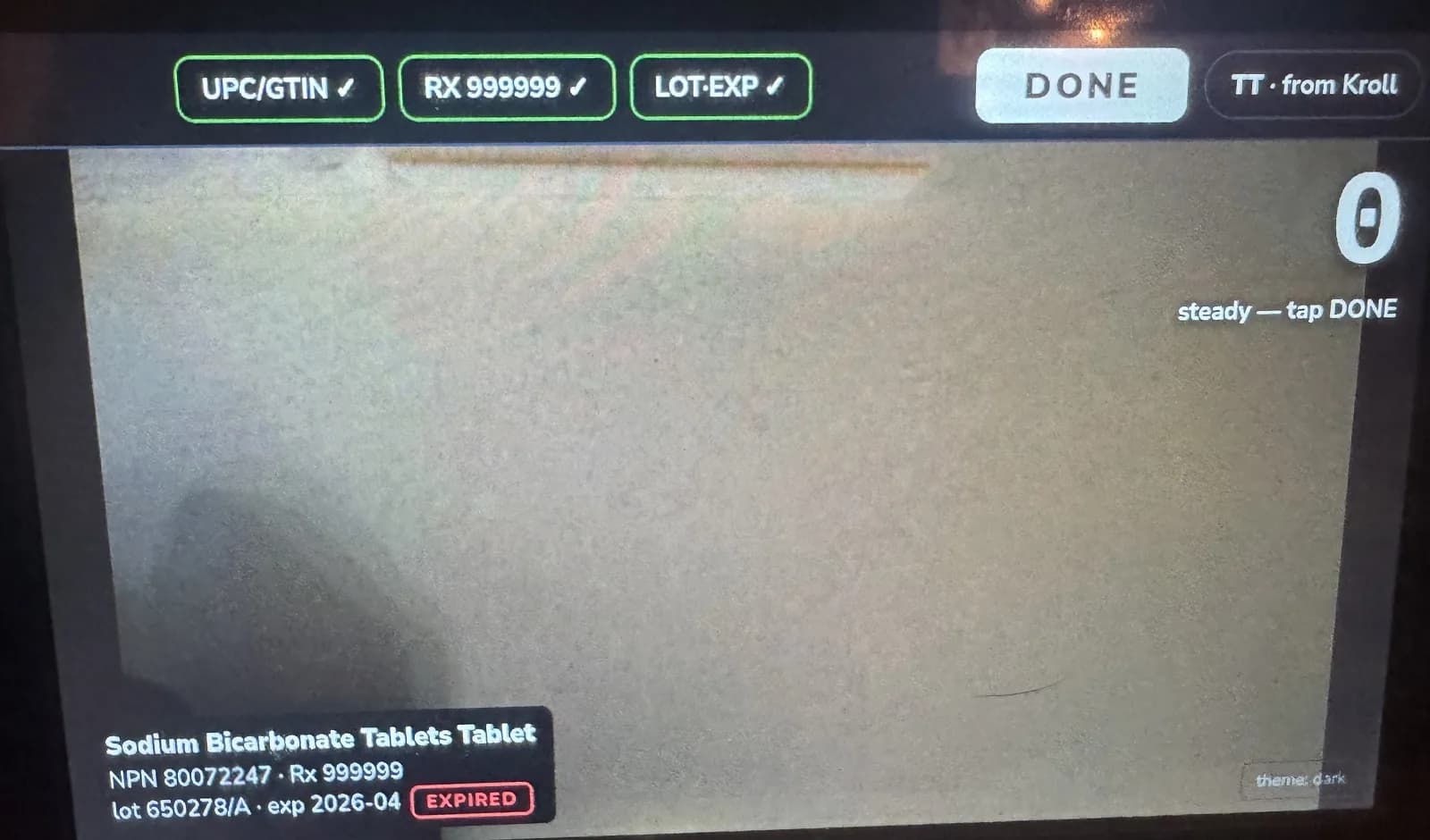
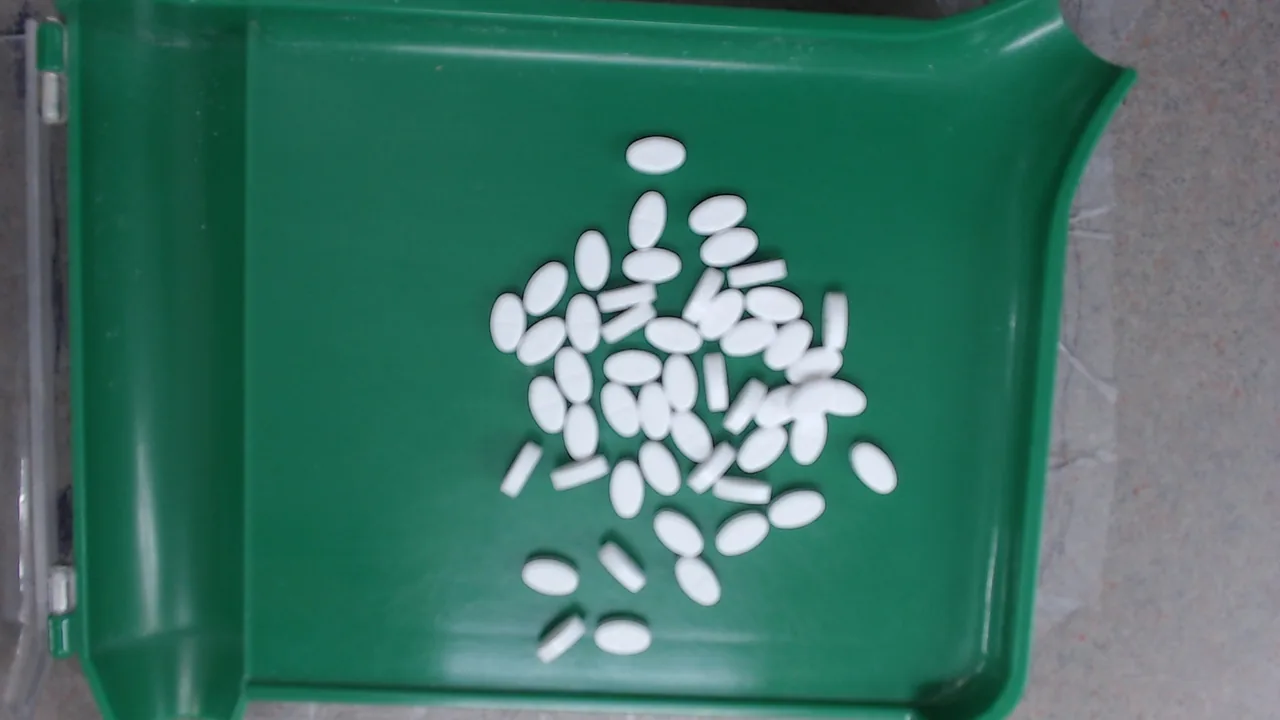
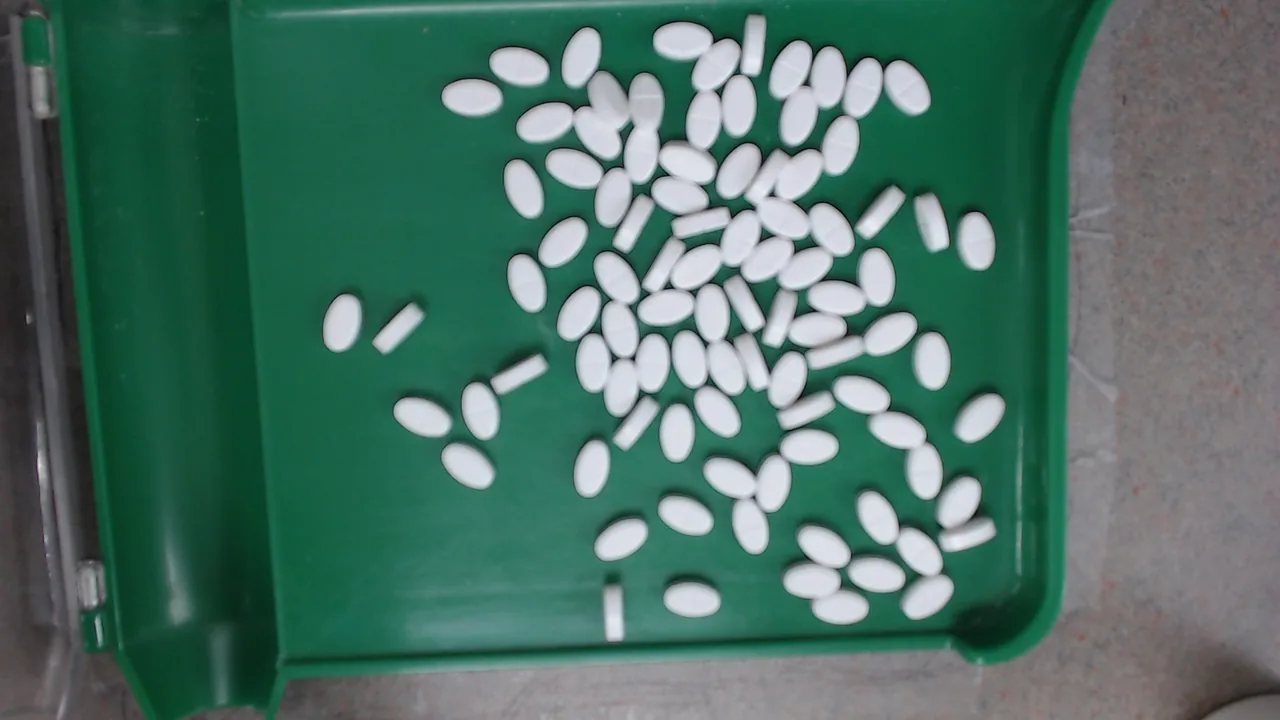
- Does it slow my technicians down?
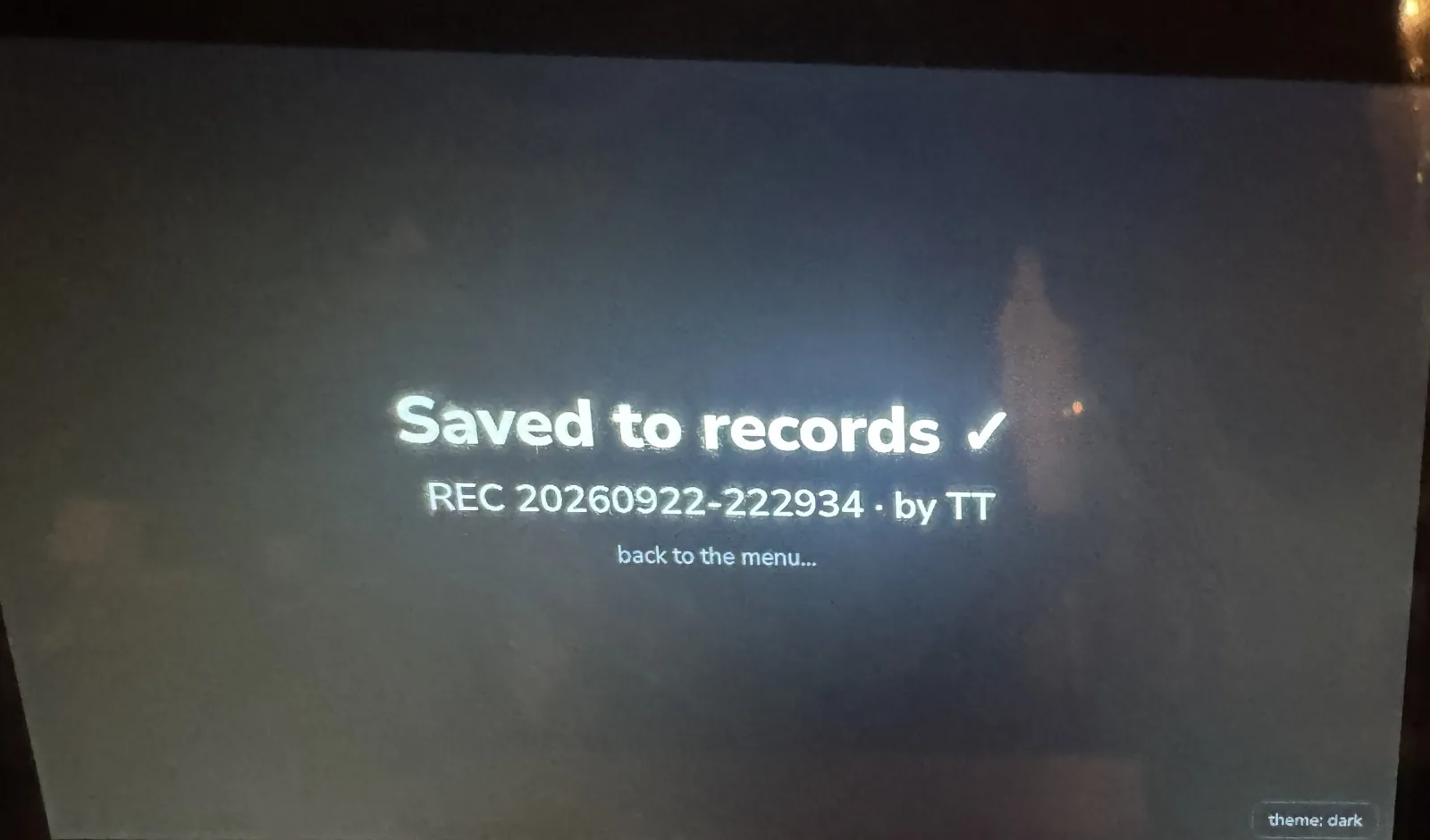
- For most fills, not at all — the record is written as the prescription is packaged. A recorded count adds about fifteen to thirty seconds: count as usual, hold the tray under, two taps. Worth it for narcotics and anything you want a photograph of on file.
- Do I need anything from TELUS?
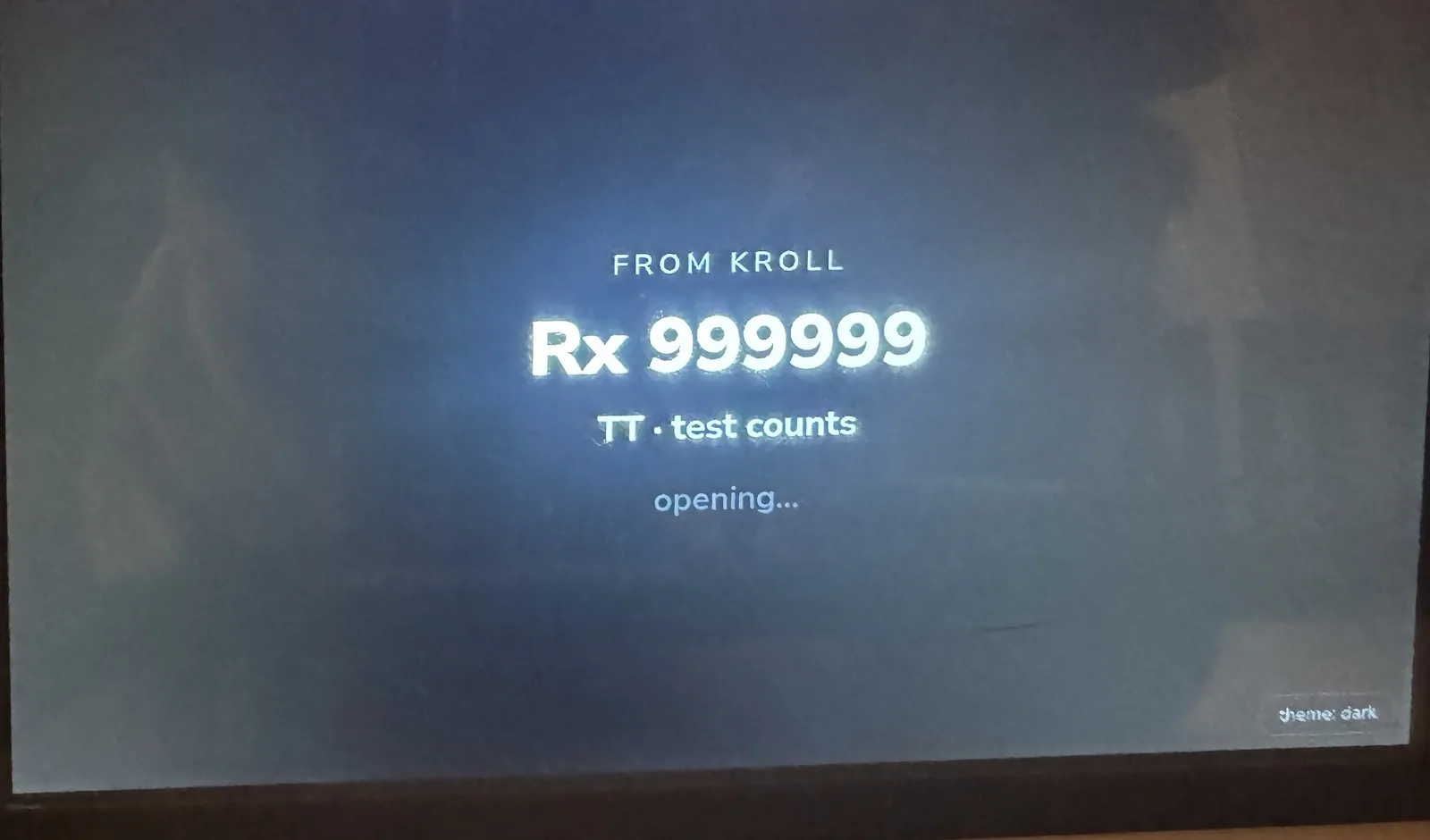
- No. No API, no licence, no plugin. While your staff work, it only reads the Kroll screen — it never clicks or types over them.
- What runs on my computer?
- A small program on the Kroll workstation that reads the screen. No installer, no admin rights, nothing from TELUS — and if you ever want it gone, you delete one folder.
- What happens when Kroll updates?
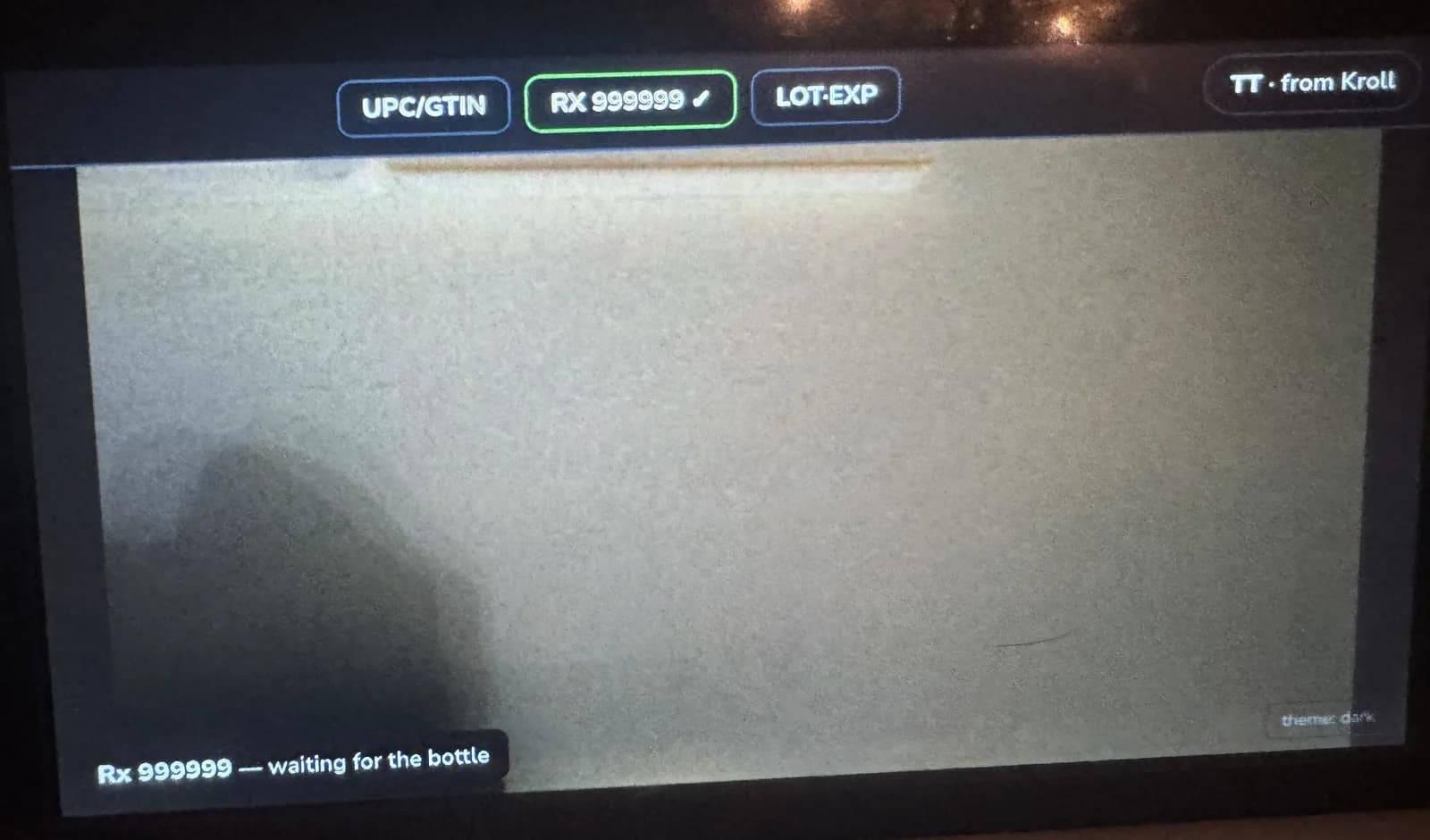
- Counting keeps working. The automatic arming reads Kroll's screen, so an update that moves things around can pause it until we adjust — nothing is lost while it does.
- Where do my records live, and who can see them?
- On the station's encrypted disk, on your counter, with a copy on a server we run in Canada, on a private network — nothing on the public internet. No other pharmacy can see them, and every time a record is opened, that is logged.
- What if the internet goes down? Or Kroll? Or the power?
- It writes to its own disk and catches up when the connection returns. Without Kroll, counting works and the automatic arming waits. After a power cut it comes back on its own, on your own network.
- Is it PHIPA-compliant?
- It was built to be. Records are encrypted on the station and encrypted where we keep the copy, they never leave your store's own silo, every time one is opened it is logged, and a station that goes missing locks itself and stays locked.
- What if it counts wrong?
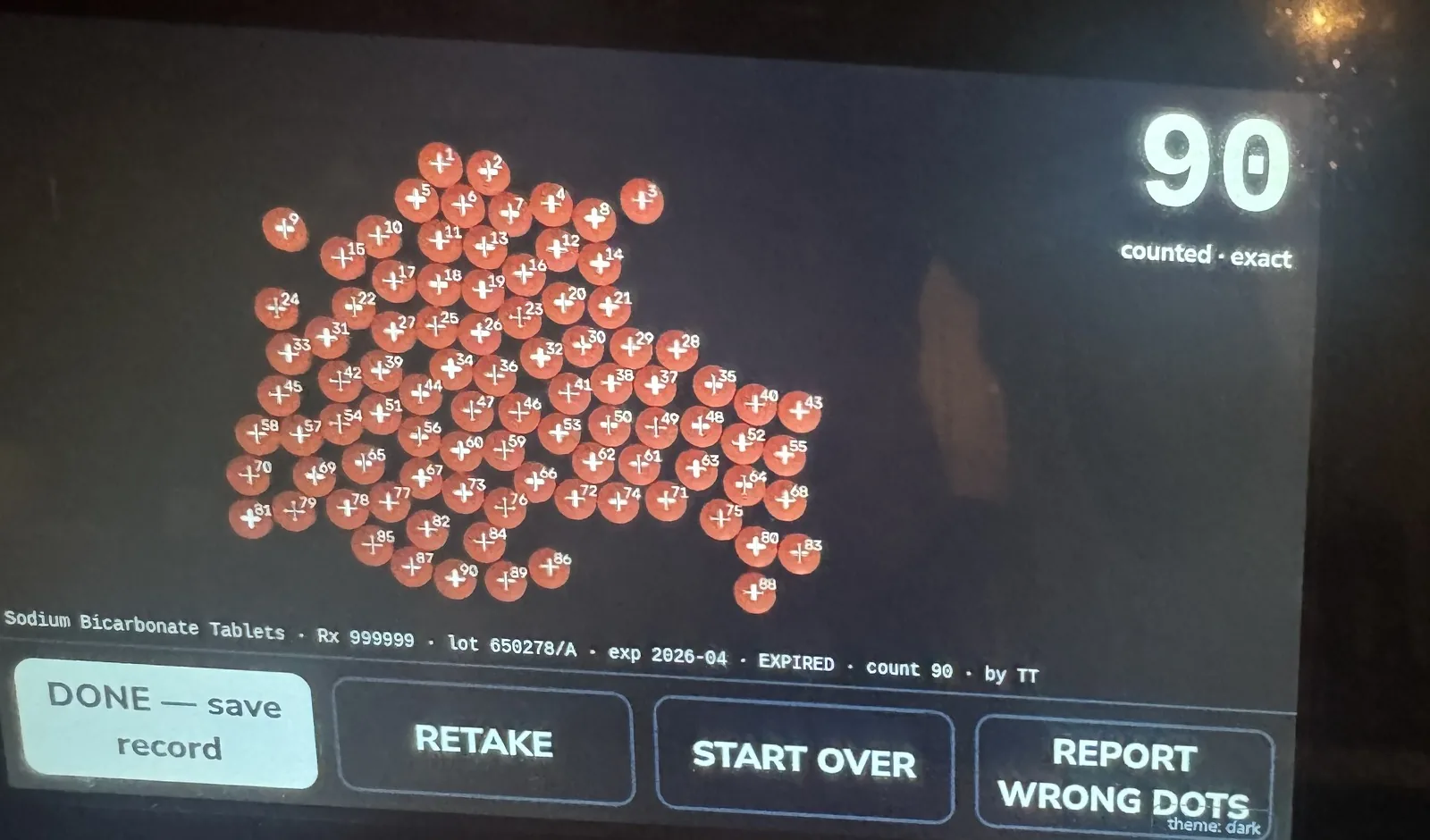
- The photograph is kept and the technician confirms the count before it is filed, so a wrong count is visible and correctable, never silent. One tap sends the picture back to improve the model.
- Does it work with my dispensing system?
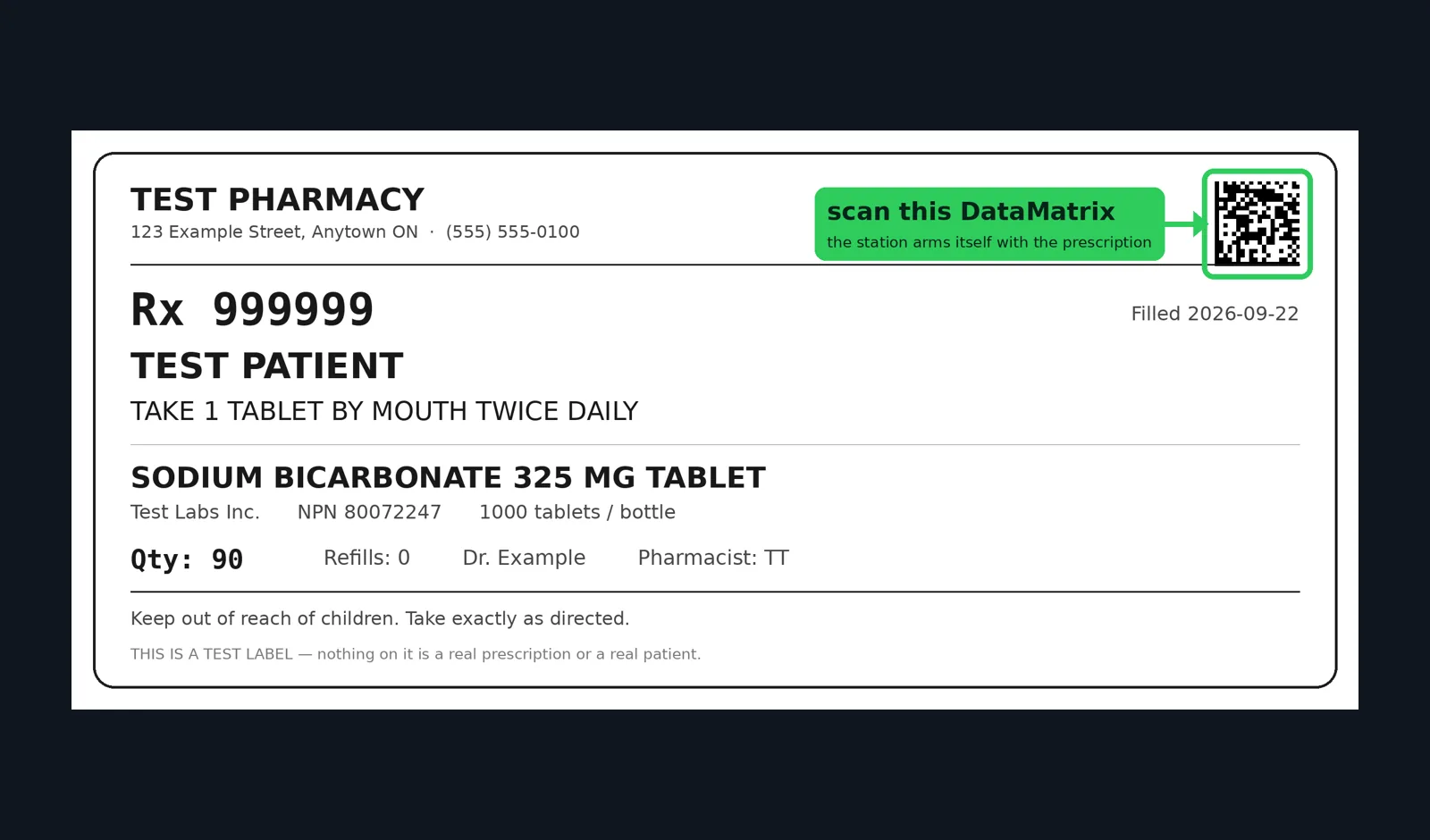
- It integrates with Kroll today; other systems may follow. It does not need one to count — the station works on its own, with the technician scanning at the bench.
- How much bench does it take?
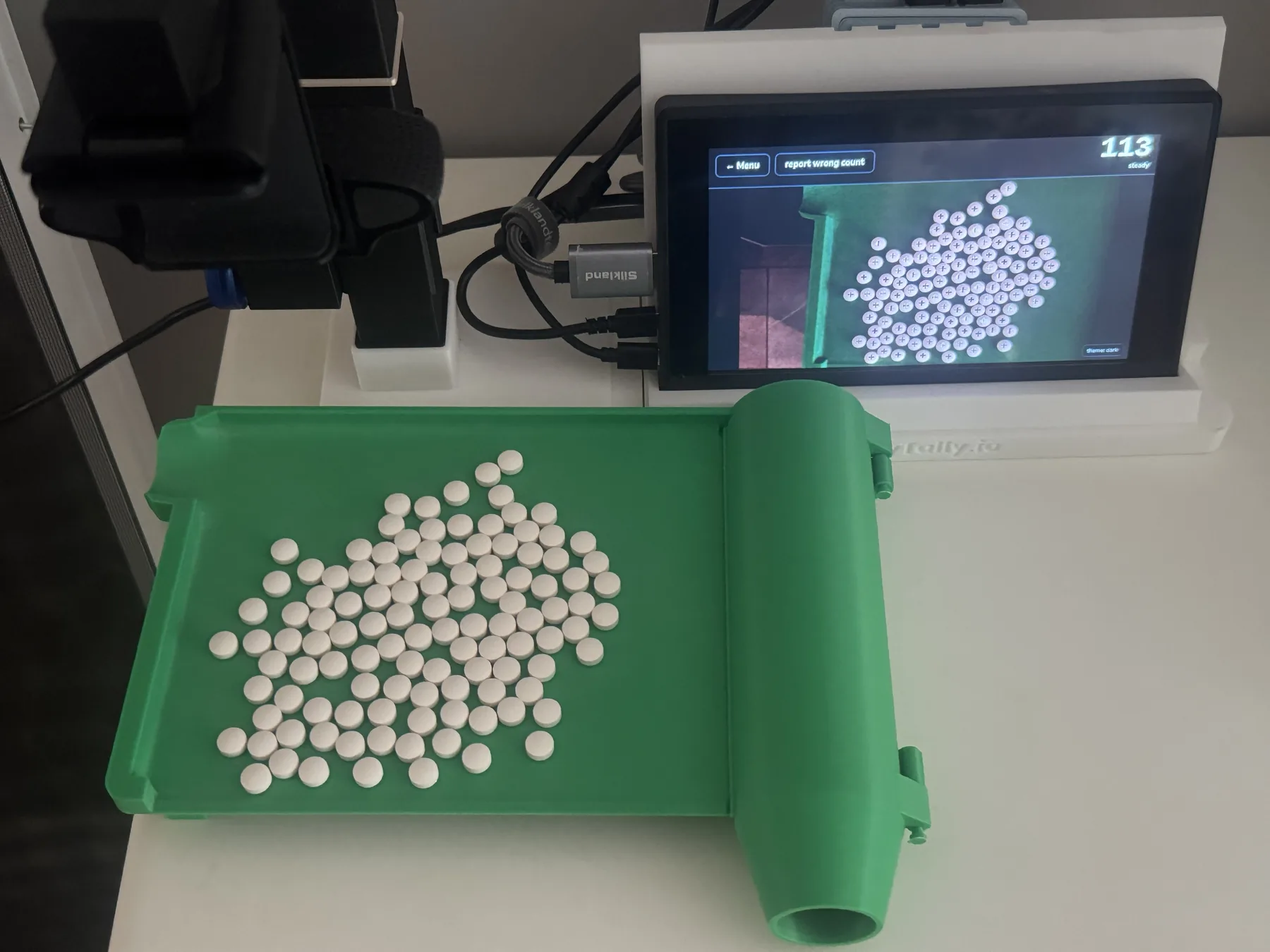
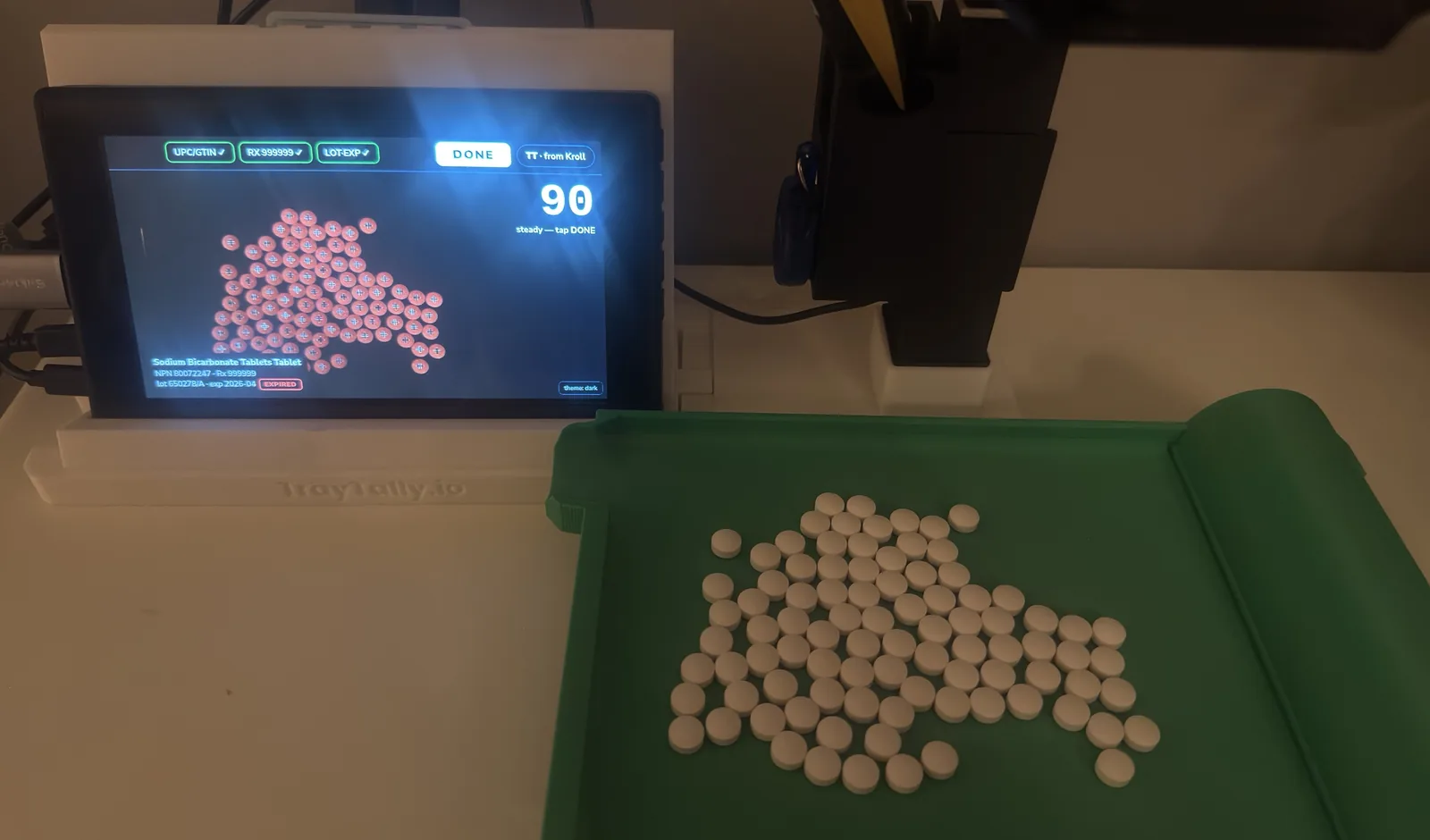
- About 35 cm wide, 15 cm deep and 30 cm tall — the photo above is the whole station.
- What does it count?
- Whole tablets and capsules. A half tablet is counted as one tablet.
- Does it help with narcotic counts?
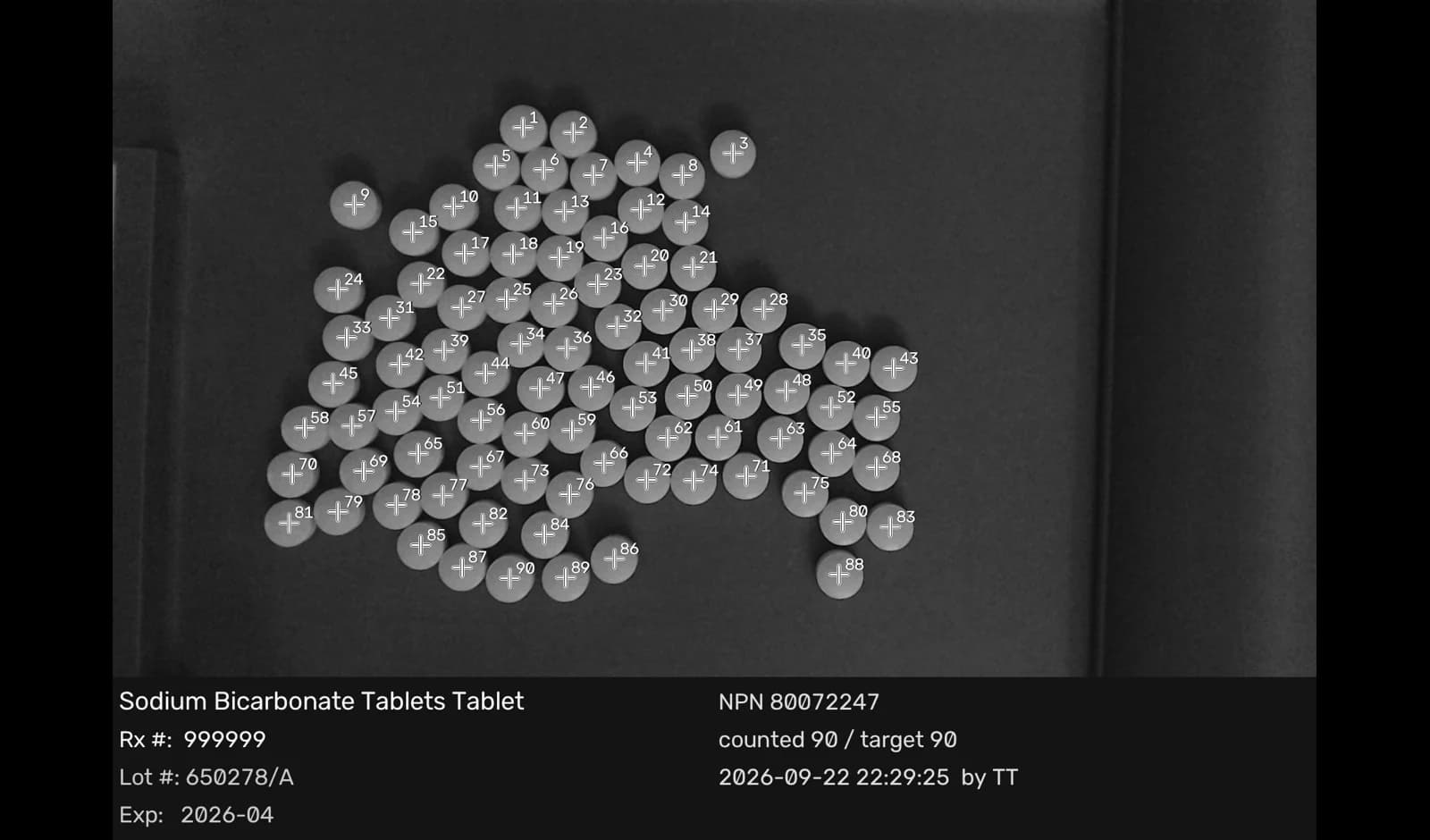
- Yes — it is what a recorded count is for. Every controlled drug is flagged, your dashboard lists them on their own, and each record holds the photograph with every tablet numbered, the count against the prescription, the lot, who and when. It supports your narcotic records; it does not replace them.
- Can I get my data out?
- Yes. Every record and photograph as a zip, and the ledger as a spreadsheet, whenever you like.
- How do technicians use it?
- Two buttons on the screen. No login, no account, ever.